Designing the past to imagine the future of immersive media
📍 Overview
In 2017, I created The History of Music Experiences, a fully hand-coded digital exploration of how humans have listened to music—from Edison’s phonograph to imagined contact-lens-based concert immersion.
This speculative design project began as a love letter to music and technology—but quickly evolved into something more: a meditation on the emotional journey of media and how we might design future experiences rooted in human desire, not just innovation.
This website had to be created to explore a current technology and explore where it may go in the future. I chose to explore the History of Music and talk about the imminent future of Virtual Reality. I had to brand the website as well as create all materials and content and write all HTML and CSS by hand and test in an online browser.
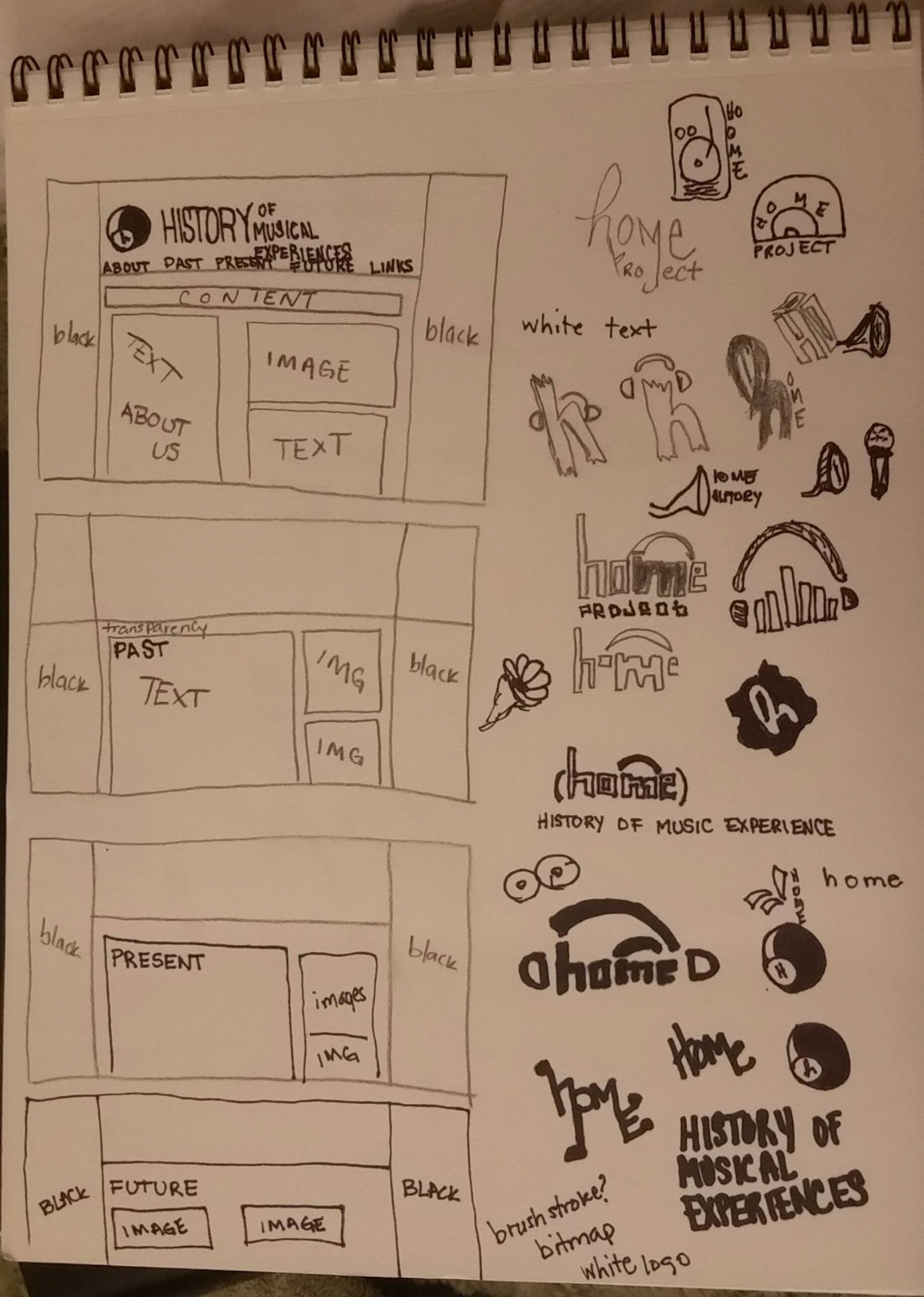
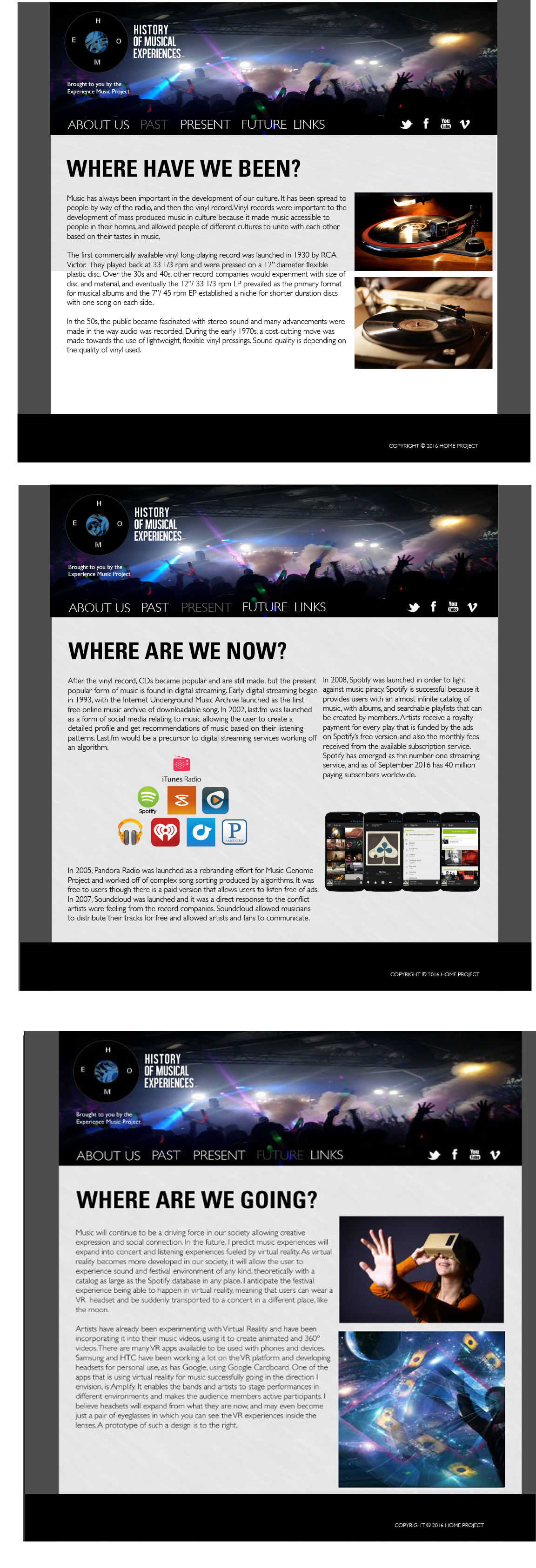
Here are the sketches and wireframes I started with to create the logo and preliminary layout and the final design.
Here are the sketches and wireframes I started with to create the logo and preliminary layout and the final design.
🧠 My Role
Researcher (cultural + technological)
Interaction Designer
Front-End Developer (HTML/CSS/JS)
Experience Futurist
💡 Concept
We don’t just consume music—we experience it in ways that reflect our identity, access, and tools.
In 2017, consumer VR was just entering the mainstream. I wanted to ask:
“If we could listen to music in any place, from any time, in any form—what would we choose?”
I proposed a future where programmable contact lenses allow users to select immersive experiences directly from their living rooms—concerts on Mars, orchestras in 1930s Vienna, punk shows in Tokyo—all personalized through biofeedback and contextual design.
🛠 Process
Designed and coded interactive timeline website (HTML/CSS/JS)
Researched music listening formats across eras
Incorporated speculative media (VR headsets → contact lenses) to prompt future-facing discussion
🔍 Outcomes
Deepened understanding of how tech interfaces evolve with culture
Showcased an early example of human-centered futurecasting
Positioned immersive tech not as spectacle, but as an extension of emotional and cultural experience
🔮 Why It Still Matters
This project foreshadowed the rise of spatial computing, AR glasses, and media personalization through wearables. In a world now exploring Apple Vision Pro, Meta Ray-Bans, and emotion-responsive interfaces, the concepts I explored are closer than ever.
But more importantly—it asks a timeless question:
“How can we design immersive tech that enhances empathy, not just escapism?”
🎙️ Takeaway
I didn’t just build a timeline—I designed a thought experiment grounded in real behavior and future tech. It reflects my belief that:
✅ The best futures are designed with the past in mind.
✅ Speculative design must still be human-centered.
✅ You don’t need AI to imagine boldly—you just need curiosity and empathy.
✅ Speculative design must still be human-centered.
✅ You don’t need AI to imagine boldly—you just need curiosity and empathy.